

Yoshua Bengio - The Theorist Who Believed in Deep Learning—Long Before the World Did
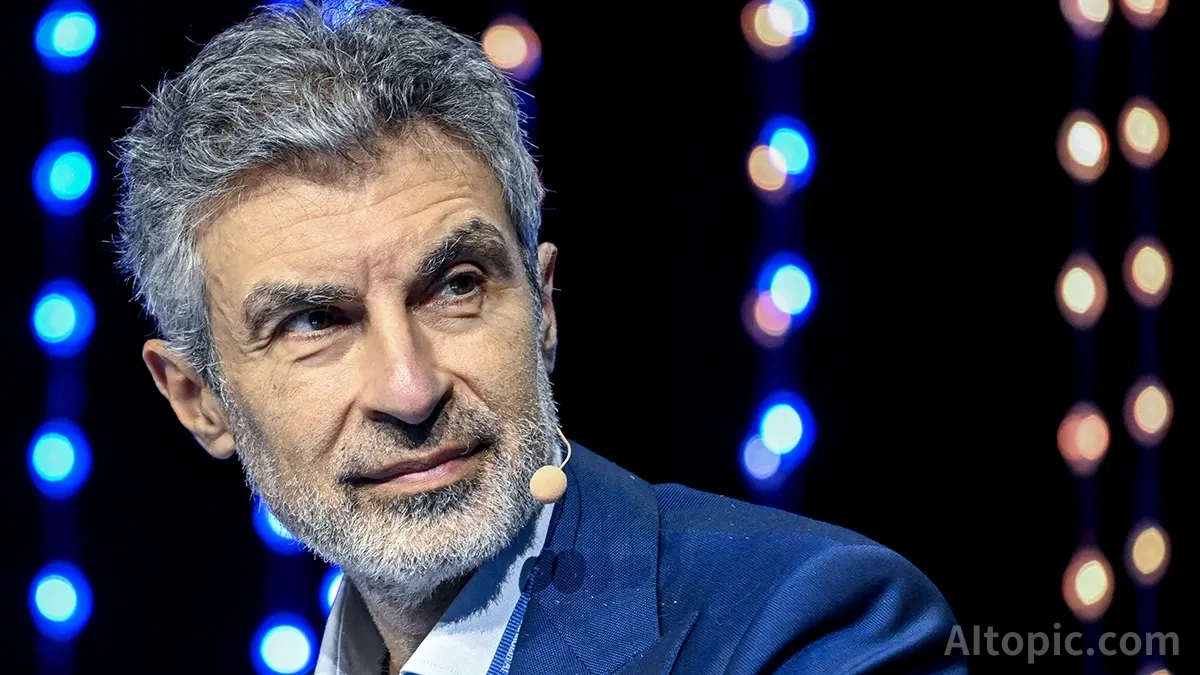
In the history of Artificial Intelligence, few scientific journeys embody the arc of perseverance, vision, and eventual vindication as profoundly as that of Yoshua Bengio. For more than three decades—through periods of skepticism, funding droughts, and academic marginalization—he championed a radical idea: that artificial neural networks, if designed and trAIned correctly, could learn hierarchical representations of data and achieve human-level understanding. At a time when the AI mainstream dismissed neural nets as obsolete “black boxes,” Bengio pursued them with quiet intensity, laying the theoretical and algorithmic foundations that would later power the deep learning revolution.
As a professor at the Université de Montréal, founder of Mila (Quebec artificial intelligence Institute), and co-recipient of the 2018 ACM A.M. Turing Award—often called the “Nobel Prize of Computing”—Bengio Stands alongside Geoffrey Hinton and Yann LeCun as one of the “godfathers of Deep Learning.” Yet his contributions extend far beyond reCognition: he pioneered key concepts in probabilistic modeling, representation learning, attention mechanisms, and Generative AI, while also becoming one of the field’s most principled voices on AI ethics, CLImate responsibility, and equitable development.
Unlike many who entered AI through engineering or computer science, Bengio’s path was shaped by a deep curiosity about how intelligence arises from physical systems—a question rooted in cognitive science, neuroscience, and philosophy. This interdisciplinary lens allowed him to see neural networks not just as tools, but as models of learning itself. His work has consistently bridged theory and prACTice, asking not only how to build better models, but why they work—and what their societal implications might be.
Early Life and Intellectual Foundations
Born in Paris, France, in 1964, Yoshua Bengio moved to Canada with his family at a young age. He grew up in Montreal, immersed in a bilingual, multicultural environment that would later Inform his commitment to linguistic diveRSIty and inclusive AI.
He earned a B.Eng. in Electrical Engineering from MCGIll University in 1986, followed by an M.Sc. and Ph.D. in Computer Science from the Same institution, completing his doctorate in 1991 under the supervision of Peter Frasconi and Paolo Gori. His early research focused on symbolic sequence processing and connectionist models, already hinting at his lifelong interest in structured knowledge and learning.
After postdoctoral work at MIT and a brief stint at AT&;T bell Labs (where he collaborated with Yann LeCun on early neural network APPlications), Bengio joined the faculty of the Université de Montréal in 1993. There, far from the AI power centers of Silicon Valley or Boston, he began building what would become one of the world’s most inFluential deep learning research ecosystems.
The Wilderness Years: Defending Neural Networks
The 1990s and early 2000s were a “winter” for neural network research. Dominated by support vector machines, Bayesian methods, and symbolic AI, the field largely viewed multi-layer perceptrons as impractical—plagued by vanishing gradients, local minima, and a lack of theoretical guarantees.
But Bengio refused to abandon the paradigm. In a series of prescient papers, he explored how neural networks could learn distributed representations—compact, high-dimensional encodings that capture semantic relationships between concepts (e.g., “king – man + woman ≈ queen”). He argued that such representations were essential for Generalization, compositionality, and transfer learning—ideas now central to modern AI.
His 2003 paper, “A Neural Probabilistic Language Model,” was revolutionary. At a time when NLP relied on n-grams and handcrafted features, Bengio proposed using a neural network to learn word embeddings and predict the next word in a sentence. This model not only outperformed traditional approaches but introduced the concept of continuous space language modeling—a direct ancestor of today’s large language models (LLMs).
Critically, Bengio emphASIzed generalization through representation, not just mEMOrization. He showed that neural networks could interpolate between known examples by leverAGIng smooth, learned manifolds in high-dimensional space—a principle now understood as the foundation of deep learning’s success.
Despite limited computing resources and scarce funding, Bengio published relentlessly, mentored students, and organized workshops to keep the neural network commUnity alive. He co-authored the seminal 2009 survey “Learning Deep Architectures for AI,” which synthesized years of scattered research into a coherent vision. Many credit this paper with reigniting global interest in deep learning just before the breakthroughs of 2012.
Breakthroughs in generative modeling and Representation Learning
While convolutional networks (pioneered by LeCun) excelled at perception, Bengio focused on generative modeling and unsupervised learning—the holy grail of AI: systems that can understand the world by observing it, without explicit labels.
He made foundational contributions to:
Variational Autoencoders (VAEs): Though often attributed to Kingma and Welling (2013), Bengio’s group developed parallel Frameworks for regularized autoencoders and denoising criteria that enabled stable training of deep generative models. His work on contractive autoencoders provided theoretical insights into manifold learning and robustness.
Energy-Based Models (EBMs): Bengio revived interest in EBMs as flexible, theoretically grounded alternatives to likelihood-based models, showing how they could represent complex distributions without restrictive assumptions.
Disentangled Representations: He advocated for learning representations where indiVidual dimensions correspond to independent factors of variation (e.g., object identity, pose, lighting)—a key step toward interpretable and controllable AI.
Perhaps his most influential conceptual contribution was the “consciousness prior”—a hypothesis that high-level reasoning requires sparse, abstract representations that can be manipulated independently of sensory detail. This idea bridges neuroscience and AI, suggesting that future systems may need architectures inspired by human cognition.
Attention, Transformers, and the Path to Modern LLMs
Though the transformer architecture was introduced by Vaswani et al. (2017) at Google, its intellectual roots trace back to Bengio’s early work on soft attention mechanisms. As early as 2014–2015, his team at Mila published papers using attention for machine translation and image captioning, demonstrating that models could dynamically focus on relevant parts of input—mimicking human selective perception.
His student Dzmitry BaHDanau co-authored the landmark 2014 paper “Neural Machine Translation by Jointly Learning to Align and Translate,” which introduced additive attention and Dramatically improved translation quality. This work directly inspired the scaled-up, self-attention mechanisms in Transformers.
Bengio also foresaw the potential of large-scale pretraining. In talks and papers circa 2016–2017, he argued that massive unlabeled corpora could be used to learn universal representations, which could then be fine-tuned for specific tasks—a vision now realized in BERT, GPT, and beyond.
Yet even as LLMs exploded in popularity, Bengio remained cautious. He warned that current models lack causal understanding, grounding in the physical world, and true reasoning—limitations that prevent them from being truly intelligent or trustworthy.
Building Mila: A Beacon for Ethical, Open AI
In 2017, Bengio founded Mila – Quebec Artificial Intelligence Institute, now one of the largest academic AI Research Centers in the world, with over 1,000 researchers. Unlike corporate labs driven by product cycles, Mila emphasizes open science, fundamental research, and social good.
Under Bengio’s leadership, Mila has produced breakthroughs in:
Climate modeling (using AI for carbon tracking and extreme weather prediction),
Healthcare (Privacy-Preserving medical diagnostics),
Low-resource NLP (supporting Indigenous and minority languages),
AI safety and alignment (developing frameworks for value learning and robustness).
Bengio insisted that Mila remain academically independent, even as tech giants offered lucrative partnerships. He turned down millions in industry funding to preserve the institute’s mission: advancing AI for humanity, not just profit.
He also launched IVADO, a pan-Quebec initiative to bridge AI research and societal application, and co-founded REDeFiNE, a nonprofit promoting responsible AI deployment in public services.
The Turing Award and Global Advocacy
In 2018, Bengio, Hinton, and LeCun were jointly awarded the ACM A.M. Turing Award “for conceptual and engineering breakthroughs that have made deep neural networks a critical component of computing.” The award marked the official canonization of deep learning as a transformative force in science and industry.
But rather than rest on his laurels, Bengio used his newfound platform to advocate for Responsible AI governance. He became a leading voice warning about:
Autonomous weapons (signing multiple open letters calling for bans),
Misinformation and deepfakes (urging regulation of synthetic media),
Concentration of AI power (calling for antitrust measures and open-source alternatives),
Climate costs of large models (promoting energy-efficient AI).
He testified before the Canadian Parliament, the EuRoPEan Commission, and the United Nations, arguing that AI policy must prioritize human rights, democratic values, and environmental sustainability.
In 2019, he co-authored the Montreal Declaration for Responsible AI, a set of 10 principles emphasizing well-being, autonomy, justice, and inclusivity. The declaration has influenced national AI strategies in Canada, France, and beyond.
Philosophy of AI: Beyond Scaling
What distinguishes Bengio from many peers is his philosophical depth. He views AI not merely as an engineering discipline, but as a window into the nature of intelligence itself. In recent years, he has shifted focus toward system 2 deep learning—a framework inspired by Daniel Kahneman’s dual-process theory of cognition.
He argues that current deep learning excels at intuitive, pattern-based reasoning (system 1) but lacks deliberative, logical, and causal reasoning (system 2). To overcome this, he proposes new architectures that combine neural networks with symbolic manipulation, memory, and planning—steps toward neuro-symbolic AI.
He also champions causal representation learning, asserting that true understanding requires models that can reason about interventions and counterfactuals, not just correlations. This work positions him at the forefront of the “next wave” of AI—one that moves beyond scaling to reasoning, robustness, and reliability.
Mentorship and Educational Legacy
Bengio has mentored over 50 Ph.D. students and postdocs, many of whom now lead top AI teams globally. Notable protégés include:
Aaron Courville (co-author of the Deep Learning textbook),
Hugo Larochelle (former head of Google Brain Toronto, now VP at Hugging Face),
Alexandre Lacoste (AI for health and climate),
Negar Rostamzadeh (multimodal learning and fairness).
He co-authored the widely used textbook Deep Learning (2016) with Ian Goodfellow and Aaron Courville—a comprehensive, mathematically rigorous introduction that has educated hundreds of thousands of students worldwide.
He also makes his lectures, code, and datasets publicly available, embodying his belief that knowledge should be a public good.
Personal Integrity and Moral Leadership
In an era when AI pioneers are often drawn into corporate boardrooms or political lobbying, Bengio has maintained remarkable integrity. He lives modestly in Montreal, donates prize money to climate causes, and refuses to work on military AI projects.
During the 2023 AI boom, when many celebrated unchecked scaling, Bengio co-signed an open letter calling for a six-month pause on giant AI experiments, citing risks to society and democracy. He later clarified that he supports innovation—but only within strong regulatory guardrails.
His moral clarity has earned him respect across ideological divides. Even critics of deep learning acknowledge his intellectual honesty and commitment to the public good.
Conclusion: The Conscience of Deep Learning
Yoshua Bengio’s legacy is dual: he is both a scientific architect of deep learning and its ethical compass. He spent decades in the wilderness defending an unfashionable idea, only to see it reshape the world—and then dedicated himself to ensuring that transformation serves humanity.
He proved that neural networks could learn meaning from data. He showed that unsupervised learning could unlock generative creativity. He demonstrated that attention could enable machine translation. And now, he warns that without causality, consciousness, and control, even the most powerful models may remain “stochastic pARRots.”
For his unwavering belief in the potential of neural networks, his foundational contributions to representation and generative learning, his creation of Mila as a global hub for open and ethical AI, and his couRAGeous advocacy for a human-centered future—Yoshua Bengio earns his place in the AI Hall of Fame not just as a pioneer, but as a guardian of wisdom in the age of algorithms.




Comments & Questions (0)
No comments yet
Be the first to comment!