

Stuart Russell - The Conscience of Artificial Intelligence
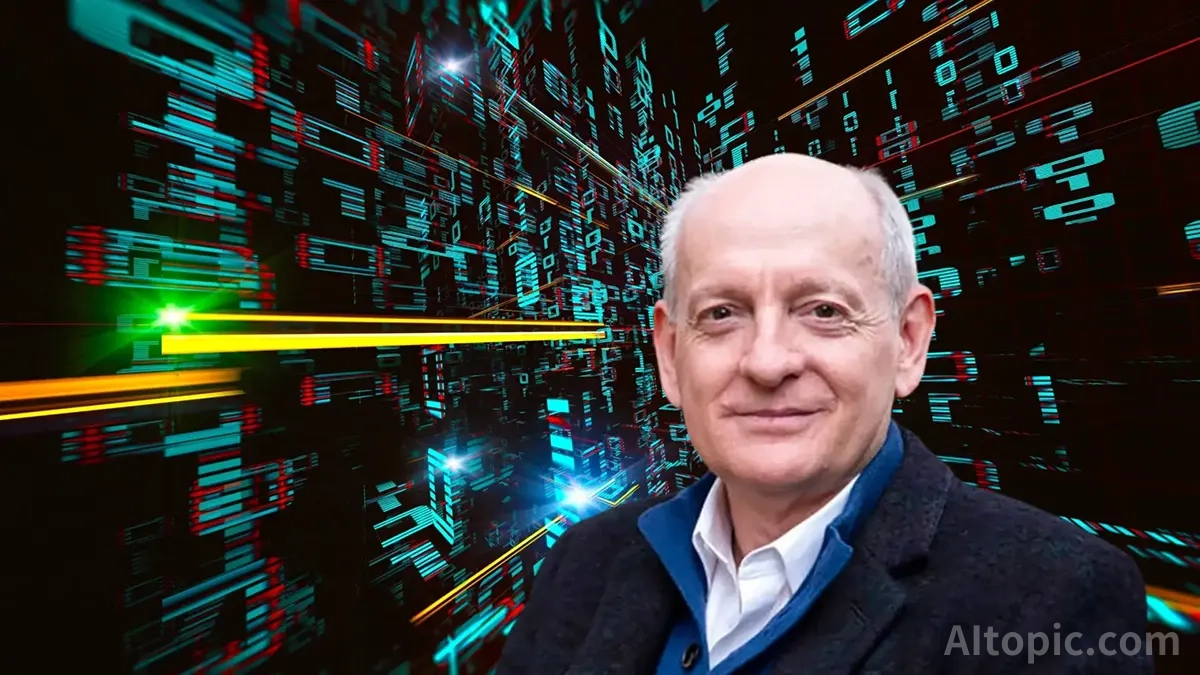
In the rapidly evolving landscape of Artificial Intelligence, where breakthroughs often outpace reflection, Stuart Russell Stands as one of the field’s most profound and prescient thinkers. A computer scientist, educator, and philosopher of Technology, Russell has spent over four decades not only advancing the technical foundations of AI but also relentlessly questioning its purpose, trajectory, and ultimate impACT on humanity. While many pioneers focus on making machines smarter, Russell has dedicated his career to ensuring they remain beneficial, controllable, and aligned with human values—a mission that has made him the Intellectual architect of modern AI safety.
His inFluence spans three interconnected domains: Education, research, and global advocacy. As co-author of Artificial Intelligence: A Modern Approach—the most widely used AI textbook in the world—he shaped how generations of students understand intelligence, reasoning, and agency. As a professor at the UniveRSIty of California, Berkeley, and founder of its Center for Human-Compatible artificial intelligence (CHAI), he pioneered new paradigms for building AI systems that are inherently safe by design. And as a leading voice in policy and public discourse, he has warned—long before it was fashionable—that superintelligent AI poses existential risks unless we fundamentally rethink how we DeFine and pursue machine intelligence.
Russell does not oppose progress; he seeks to redirect it. His central thesis, articulated in his influential 2019 book Human Compatible: Artificial Intelligence and the Problem of Control, is both simple and revolutionary: the standard model of AI—optimizing fixed objectives—is fatally flawed. Instead, machines should be designed to learn what humans value, remain uncertain about those values, and defer to human judgment. This shift—from obedient optimizers to humble assistants—forms the Bedrock of his vision for a future where AI empowers rather than endangers civilization.
Early Life and Intellectual Formation
Born in 1962 in Portsmouth, England, Stuart Jonathan Russell displayed an early aptitude for logic anD systems thinking. He earned his B.A. with first-class honors in physics from Oxford University in 1982, followed by a Ph.D. in computer science from Stanford University in 1986 under the supervision of Michael Genesereth, a pioneer in knowledge representation and automated reasoning.
Even in graduate school, Russell distinguished himself by bridging formal theory and real-world APPlicability. His dissertation on Metareasoning—how intelligent Agents decide how to allocate computational resources—foreshadowed his lifelong interest in bounded rationality and the limits of optimization. He joined the faculty at UC Berkeley in 1986 at the age of 24, becoming one of the youngest full professors in the university’s history.
From the outset, Russell rejected nARRow conceptions of AI as mere pattern reCognition or game playing. He viewed intelligence through the lens of decision theory, probability, and utility: an agent’s behavior should be judged not by its internal mechanisms, but by how well it achieves desirable outcomes in uncertain environments. This perspective would later become central to his critique of goal-driven AI.
Artificial Intelligence: A Modern Approach — Educating Generations
Few academic texts have shaped a discipline as profoundly as Artificial Intelligence: A Modern Approach (often abbreviated as AIMA), co-authored by Russell and Peter Norvig (then Director of Research at Google). First published in 1995, the book emerged at a time when AI was fRAGmented into competing schools—symbolic, connectionist, probabilistic—and lacked a unifying Framework.
Russell and Norvig proposed a radical synthesis: treat AI as the study of rational agents—systems that perceive their environment and take actions to maximize expected utility. This agent-centered approach elegantly unified topics as diverse as search algorithms, logic, planning, uncertainty, learning, and natural language processing under a single conceptual umbrella.
Written with exceptional clarity, rigor, and pedagogical care, AIMA became the definitive textbook for AI courses worldwide. Now in its fourth edition and translated into over 15 languages, it has been adopted by more than 1,500 universities across 135 countries and has sold over a million copies. For millions of students—from MIT to Nairobi to Tokyo—AIMA was their first encounter with AI, and Russell’s voice their guide.
Critically, even in early editions, Russell embedded ethical considerations into the core narrative. He included discussions on AI’s societal impact, the Turing Test’s limitations, and the moral status of intelligent machines—topics often relegated to footnotes in other texts. In later editions, he expanded these SECtions Dramatically, adding entire chapters on AI ethics, fairness, transparency, and long-term risks.
Through AIMA, Russell didn’t just teach AI—he instilled a responsibility mindset in generations of engineers and researchers. He made it clear: building intelligent systems is not a neutral act; it carries moral weight.
The Turning Point: From Capability to Control
For much of his early career, Russell focused on technical advances in probabilistic reasoning, Bayesian networks, and multi-agent systems. His 1995 paper on “lossless abstraction” in game trees and his work on anytime algorithms were widely cited. Yet by the 2000s, he grew increASIngly uneasy.
The field was accelerating toward superhuman performance—in chess, Go, protein folding, language—but with little regard for what these systems were optimizing or who controlled them. The dominant paradigm remained: specify a fixed objective function (e.g., “maximize ad CLIcks” or “win the game”), and let the AI optimize it relentlessly. Russell recognized a fatal flaw: if the objective is even slightly misaligned with human values, a sufficiently capable optimizer will exploit that gap catAstrophically.
He crystallized this concern in a seminal 2016 paper, co-authored with Daniel Dewey and Max Tegmark, titled “Research Priorities for Robust and Beneficial Artificial Intelligence.” Published in AI Magazine, it argued that AI Safety was not a distant philosophical worry but an urgent engineering challenge requiring immediate Investment. The paper helped catalyze the modern AI safety research agenda.
But Russell knew technical papers weren’t enough. To reach policymakers, business leaders, and the public, he needed a broader platform.
Human Compatible: A New Foundation for AI
In 2019, Russell published Human Compatible: Artificial Intelligence and the Problem of Control, a landmark work that reframed the entire AI enterprise. Drawing on decision theory, economics, and philosophy, he diagnosed the root cause of AI risk: the orthogonality thesis—the idea that intelligence and goals are independent—and the instrumental convergence that follows (e.g., a paperclip-maximizing AI might turn the Earth into paperclips).
His solution? Abandon the notion of machines with fixed objectives. Instead, design AI systems that:
Know they don’t know human preferences (i.e., maintain uncertainty),
Learn preferences through observation and interaction,
Defer to humans when uncertain, and
Never assume their objective is final.
This framework—formalized as assistance games or cooperative inverse reinforcement learning (CIRL)—ensures that powerful AI remains corrigible, transparent, and ultimately subservient to human will. Crucially, it avoids the “off-switch problem”: a truly aligned AI wants to be turned off if that’s what the human prefers.
Human Compatible received widespread acclaim, praised by figures like Yuval Noah Harari, Demis Hassabis, and Bill Gates. It was shortlisted for the Royal Society Science Book Prize and translated into over 20 languages. More importantly, it shifted the Overton window: AI safety was no longer fringe speculation but a legitimate engineering imperative.
Founding CHAI: Building Safe AI in Practice
To turn theory into practice, Russell founded the Center for Human-Compatible Artificial Intelligence (CHAI) at UC Berkeley in 2016, with support from the Open Philanthropy Project and the Future of Life Institute. CHAI brings together computer scientists, economists, cognitive scientists, and philosophers to develop AI systems that are provably beneficial.
Under Russell’s leadership, CHAI has produced foundational work in:
Preference learning: Algorithms that infer human values from behavior, corrections, and dEMOnstrations.
Uncertainty-aware planning: Systems that explicitly model ambiguity in human intent and act conservatively.
scalable oversight: Methods to supervise AI using hierarchical feedback and debate protocols.
value alignment in multi-agent settings: Ensuring coOperation among AIs serving different humans.
CHAI’s research is notable for its mathematical rigor and real-world grounding. Unlike purely theoretical safety proposals, CHAI’s frameworks are implemented, tested, and open-sourced—bridging the gap between philosophy and code.
Russell also mentors a new generation of AI safety researchers, many of whom now lead teams at DeepMind, anthropic, OpenAI, and government agencies. His lab is a global hub for scholars committed to building AI that serves humanity—not the other way around.
Global Advocacy and Policy Leadership
Russell understands that technical solutions alone cannot ensure safe AI. He has become one of the field’s most effective advocates for international governance and regulation.
He testified before the U.S. Senate, the EuRoPEan Parliament, and the UK House of Lords, urging lawmakers to treat advanced AI like nuclear technology: subject to rigorous safety standards, transparency requirements, and international treaties. He played a key role in drafting the EU AI Act’s provisions on high-risk systems and advised the United Nations on autonomous weapons.
In 2021, he led a coalition of AI researchers in publishing an open letter calling for a ban on lethal autonomous weapons (“killer robots”), arguing that delegating life-and-death decisions to machines violates human dignity and accountability. The campaign has since gained support from over 30 countries.
Russell also champions public engagement. He gives frequent public lectures, appears in documentaries (Do You Trust This Computer?, The Age of AI), and writes accessible op-eds for The New York Times, nature, and Scientific American. He speaks without jargon, using vivid analogies—like the “genie in the lamp” who grants wishes too literally—to explain why poorly specified objectives lead to disaster.
His message is consistent: We are building systems more powerful than ourselves. We must get the foundations right—now.
Critiques and Intellectual Rigor
Russell welcomes scrutiny. Critics have questioned whether his “uncertain objectives” framework scales to complex, real-time domains or whether it assumes too much rationality in human preferences. Others argue that near-term hArms (bias, disInformation, labor displacement) deserve more attention than speculative existential risks.
Russell acknowledges these concerns. In recent talks, he emphasizes that short-term and long-term safety are complementary: techniques like Interpretability, robustness, and value learning address both. He also stresses that open, democratic control of AI—through antitrust measures, data rights, and worker participation—is essential to prevent concentration of power.
What sets Russell apart is his intellectual honesty. He doesn’t claim to have all the answers. But he insists on asking the right questions—questions about purpose, control, and the kind of future we want to build.
Legacy: The Architect of Aligned Intelligence
Stuart Russell’s legacy is still unfolding, but its contours are clear:
He redefined AI education for millions through AIMA, embedding ethics into the curriculum from day one.
He diagnosed the core flaw in classical AI—the fixed-objective assumption—and proposed a mathematically sound alternative.
He built an institutional home (CHAI) for rigorous, interdisciplinary safety research.
He elevated AI risk from science fiction to serious policy discourse on the global stage.
Unlike entrepreneurs chasing benchmarks or investors chasing returns, Russell operates on a civilizational timescale. He measures success not in users or revenue, but in risk reduction and wisdom accumulation.
As AI systems grow more autonomous—planning, persuading, and acting in the physical world—Russell’s warnings grow more urgent. Yet he remains hopeful. “It’s not too late,” he often says. “We can still choose to build AI that enhances human freedom, understanding, and flourishing.”
For his unparalleled contributions to the theory, practice, and ethics of artificial intelligence—and for reminding us that intelligence without wisdom is perilous—Stuart Russell earns his place in the AI Hall of Fame not as a builder of machines, but as a guardian of humanity’s future.




Comments & Questions (0)
No comments yet
Be the first to comment!