

Andrew Ng - The Educator Who Democratized Deep Learning
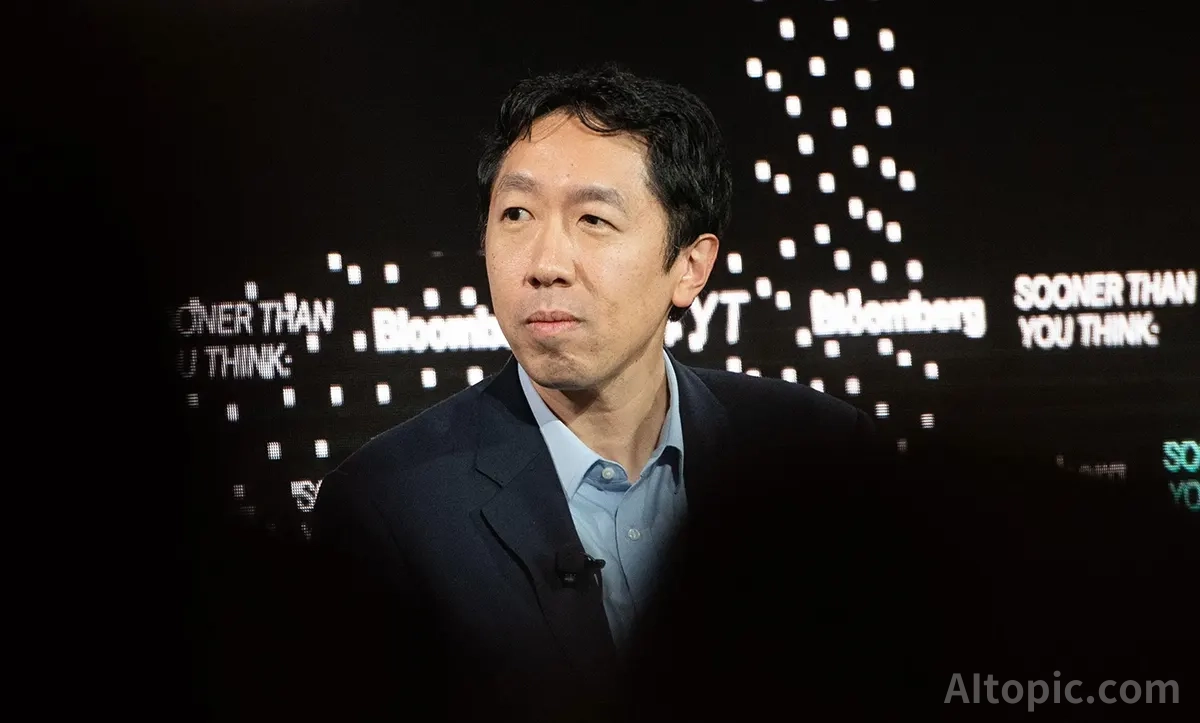
In the pantheon of Artificial Intelligence pioneers, few have shaped the field as broadly—and humanely—as Andrew Ng. A computer scientist, entrepreneur, and educator of rare vision, Ng has played a pivotal role in transforming AI from an esoteric academic discipline into a global force for innovation, economic growth, and social good. While others built models or founded companies, Ng built ecosystems: he taught millions how to think like AI prACTitioners, empowered enterprises to adopt machine learning at scale, and championed a future where AI serves humanity—not just the tech elite.
His contributions span three interconnected domains: research, Education, and industrialization. As a co-founder of Google Brain, he helped prove that deep neural networks could learn meaningful representations from raw data—a breakthrough that ignited the modern AI revolution. As Chief Scientist at Baidu, he brought AI to one of the world’s largest internet ecosystems, dEMOnstrating its power in search, speech, and Autonomous Driving. And as co-founder of Coursera, he democratized access to world-class education, making Machine Learning one of the most studied subjects on Earth.
But perhaps Ng’s greatest legacy lies not in any single invention, but in his unwavering belief that AI is a Skill, not a SECret—and that anyone, anywhere, can learn it. Through his legendary Stanford course, his free online lectures, and his tireless advocacy, he turned “deep learning” from a niche term into a global movement. In doing so, he didn’t just train engineers—he inspired a generation to believe that they, too, could shape the Intelligent future.
Early Life and Academic Foundations
Born in the United Kingdom in 1976 to Chinese-Malaysian parents, Andrew Ng spent much of his childhood in Singapore before moving to the United States for higher education. He earned a bachelor’s degree in computer science from Carnegie Mellon University, followed by a master’s from MIT and a PHD from UC Berkeley under the supervision of Michael Jordan, one of the founding figures of modern machine learning.
Even in graduate school, Ng stood out for his ability to bridge theory and practice. His early work focused on reinforcement learning, robotics, and probabilistic graphical models—areas where uncertainty, decision-making, and real-world interaction collide. He joined the faculty at Stanford University in 2002, quickly becoming a beloved instructor known for his clarity, humility, and infectious enthusiasm for AI.
At Stanford, Ng didn’t just teach algorithms—he taught mindsets. He emphASIzed intuition over formalism, visualization over abstraction, and real data over toy problems. His students included future AI leaders like Fei-Fei Li (creator of ImageNet) and Quoc Le (co-inventor of Google’s neural machine translation). But Ng knew that classroom walls were too nARRow. If AI was to matter, it needed to reach beyond Silicon Valley.
The Stanford Machine Learning course and the Birth of Mass AI Education
In 2011, Ng made a bold experiment: he offered his Stanford CS229: Machine Learning course online—for free—to anyone with an internet connection. To his surprise, over 100,000 students from 190 countries enrolled. The course covered Linear regression, neural networks, support vector machines, and clustering—but what captivated learners was Ng’s teaching style: patient, precise, and deeply empathetic. He drew diagrams by hand, explained gradients with water analogies, and reassured students that confusion was part of the process.
The response was overwhelming. Emails poured in from fArmers in Kenya, teachers in Brazil, retirees in Japan—all saying the Same thing: “This changed my life.” Inspired, Ng partnered with his former student Daphne Koller to co-found Coursera in 2012, a platform dedicated to bringing univeRSIty-level education to the world. Their first offering? Ng’s Machine Learning Specialization, which would go on to enroll over 8 million learners—making it one of the most popular online courses in history.
Ng didn’t stop there. He produced free video lectures on Deep Learning, launched the AI for Everyone course for non-technical audiences, and created hands-on programming assignments using Python and Tensorflow. He insisted that code be simple, datasets small, and concepts incremental—so that even those with modest laptops could participate. In an era when AI education was often gatekept by elite institutions, Ng tore down the gates.
His impact was transformative. Countless data scientists, startup founders, and corporate innovators trace their careers back to watching Ng explain logistic regression on a whiteboard. As one learner put it: “He didn’t just teach me AI—he gave me permission to believe I belonged in this field.”
google Brain: Proving Deep Learning at Scale
While educating the world, Ng also pushed the frontiers of research. In 2011, alongside Jeff Dean, Greg Corrado, and Rajat Monga, he co-founded Google Brain, an internal project to explore large-scale neural networks. At the time, deep learning was still viewed with skepticism by many in industry. Most believed that hand-engineered features—not raw pixels or words—were necessary for intelligent systems.
Ng and his team set out to prove otherwise. Using Google’s vast computational resources, they trained a nine-layer neural network on 10 million unlabeled YouTube videos. The result? The model learned to recognize cats—not because it was told to, but because it discovered the concept through unsupervised learning. This 2012 experiment, though seemingly whimsical, was a watershed moment: it demonstrated that deep neural networks could learn hierarchical representations from massive, unstructured data—a principle that would underpin nearly all modern AI.
Google Brain quickly expanded into speech reCognition, improving Android’s voice search by 20% overnight—the largest single jump in accuracy in Google’s history. Ng’s leadership helped institutionalize deep learning across Google products, from Gmail spam filtering to Google Photos. More importantly, he advocated for open publication, ensuring that key advances—like the DistBelief Framework—were shared with the research commUnity.
Though he left Google in 2013, Ng’s work at Brain laid the foundation for the industry-wide shift to end-to-end learneD systems. He proved that deep learning wasn’t just academically interesting—it was industrially viable.
Leading AI at Baidu: From Research to Real-World Impact
In 2014, Ng accepted an offer to become Chief Scientist at Baidu, China’s leading search engine, and head of its newly formed Baidu Research division. His mandate was clear: make Baidu an AI-first company.
Over the next three years, Ng built one of the world’s most advanced industrial AI labs, hiring hundreds of researchers and deploying deep learning across Baidu’s ecosystem. Under his leadership:
Baidu’s speech recognition system achieved near-human accuracy, enabling voice search for hundreds of millions of Chinese users.
Deep learning powered Baidu’s feed recommendation engine, Dramatically increasing user engagement.
The Apollo autonomous driving platform was launched, integrating perception, planning, and control modules based on neural networks.
Ng also championed AI infrastructure, overseeing the development of GPU clusters and distributed training systems that rivaled those at Google and Facebook. He insisted that research be tightly coupled with product—every algorithm had to solve a real user problem.
Perhaps most significantly, Ng helped elevate China’s AI ambitions on the global stage. He testified before U.S. Congress about AI competition, advised Chinese policymakers on talent development, and argued that AI progress should be measured not by who wins, but by how much it benefits humanity.
He left Baidu in 2017, citing a desire to return to education and entrepreneurship. But his tenure proved that deep learning could transform not just Western tech giants, but entire national digital economies.
Landing AI and the Industrialization of Machine Learning
After Baidu, Ng turned his attention to a neglected frontier: AI in traditional industries. While tech companies raced to build chatbots and self-driving cars, factories, farms, and hospitals remained largely untouched by AI. Ng saw an opportunity—and a responsibility.
In 2017, he founded Landing AI, a company focused on bringing computer vision and predictive analytics to manufacturing, agriculture, and healthcare. Unlike cloud-based AI Services, Landing AI’s platform, LandingLens, was designed for edge deployment, small-data scenarios, and non-expert users. It enabled factory managers to detect product defects with smartphone cameras, farmers to monitor crop health via drone imagery, and radiologists to flag anomalies in X-rays—all without writing a single line of code.
Ng framed this as the “AI transformation” of industry: not a one-time project, but a cultural and Operational shift. He developed frameworks like the “AI Canvas” and “Data Flywheel” to help executives prioritize use cases, collect high-quality data, and iterate rapidly. He argued that success in Industrial AI depended less on fancy algorithms and more on data strategy, cross-functional teams, and change management.
Through Landing AI, Ng extended his educational mission beyond indiViduals to organizations. He published free guides, hosted workshops, and gave keynote speeches urging CEOs to “think like AI-native companies.” His message was consistent: AI is not mAGIc—it’s a repeatable engineering discipline.
Advocacy, Ethics, and the future of AI
Beyond building and teaching, Ng has been a leading voice on AI policy, ethics, and societal impact. He rejects both techno-utopianism and alarmism, advocating instead for a pRAGmatic, evidence-based APProach.
On jobs, he argues that AI will augment, not replace, most workers—and that the real risk is not mass unemployment, but inequality in AI Adoption. He calls for massive Investment in reskilling, particularly in developing economies.
On safety, he supports regulation focused on applications, not models—for example, requiring audits for AI used in hiring or lending, but not restricting open-source research. He warns against over-regulating foundational models, which could entrench Big Tech monopolies.
On Open Source, he champions responsible openness, believing that widespread access to AI tools fosters innovation, competition, and transparency. He has praised initiatives like Meta’s Llama and Mistral AI for lowering barriers to entry.
And on geopolitics, he urges U.S.-China cooperation on AI safety and Standards, warning that decoupling could lead to fragmented, less secure AI ecosystems.
Ng’s balanced perspective has made him a trusted advisor to governments, NGOs, and corporations worldwide. He serves on the boards of Coursera, Woebot Health, and Drive.ai (which he co-founded), and continues to publish widely read newsletters and LinkedIn posts demystifying AI trends.
Legacy: The Teacher Who Built a Movement
Andrew Ng’s legacy is not DeFined by a single paper, product, or company. It is defined by people—millions of them.
The student in Nigeria who landed her first data job after completing his Coursera course.
The factory owner in Vietnam who reduced waste by 30% using LandingLens.
The policymaker in Brazil who used his AI Canvas to design a national AI Strategy.
The researcher in India who was inspired by his lectures to pursue a PhD in NLP.
Ng made AI feel accessible, learnable, and human. He replaced jargon with clarity, fear with curiosity, and exclusivity with invitation. In an age of AI hype and anxiety, he remains a steady, optimistic voice—reminding us that Technology is ultimately a reflection of our values, choices, and efforts to uplift one another.
As he often says: “AI is the new electricity.” Just as electricity transformed every industry a century ago, AI will reshape everything from education to energy to entertainment. But unlike electricity, AI requires human guidance—and Andrew Ng has spent his career ensuring that we are all equipped to provide it.
For his unparalleled contributions to AI education, research, and industrialization—and for empowering a global community to build a better future with AI—Andrew Ng stands not just in the AI Hall of Fame, but as one of its most enduring and compassionate architects.




Comments & Questions (0)
No comments yet
Be the first to comment!