

Wenfeng Liang - The Quiet Challenger from Hangzhou: Building China’s Answer to OpenAI
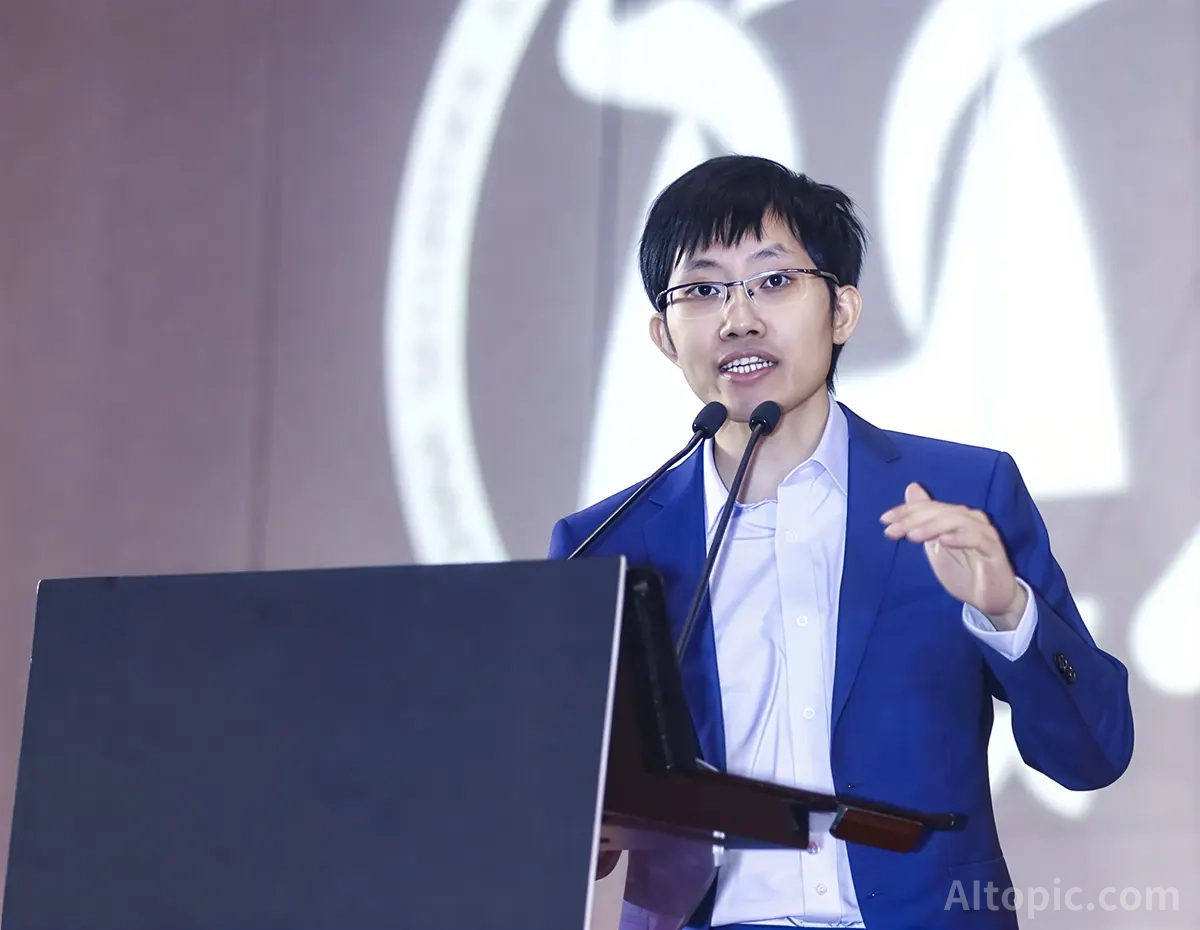
In the global race to build powerful, accessible Artificial Intelligence, Wenfeng Liang has emerged as one of the most consequential—and under-recognized—figures of the post-ChatGPT era. As founder and CEO of DeepSeek, a Chinese AI startup headquartered in Hangzhou, Liang has DeFied expectations by releASIng a series of high-performance, open-weight large language models, culminating in DeepSeek-R1, a model that rivals leading Western systems in reasoning, coding, and multilingual capability—yet remAIns freely available to researchers, developers, and enterprises worldwide.
Unlike many in the AI boom who chase headlines or venture capital, Liang operates with the discipline of an engineer and the vision of a builder. He rarely gives interviews, avoids social media spectacle, and speaks plainly when he does APPear in public: “We don’t need more hype. We need better models that real people can ACTually use.” This ethos—pRAGmatic, open, and technically uncompromising—has positioned DeepSeek not just as a Chinese competitor to OpenAI, but as a global advocate for open foundation models in an age of increasing AI centralization.
Liang’s journey—from Algorithmic Trading prodigy to AI entrepreneur—reflects a deep belief that capability should be dEMOcratized, not hoarded. At a time when U.S. tech giants restrict access to their most advanced models through API-only interfaces and opaque licensing, DeepSeek’s commitment to open weights, transparent benchmarks, and permissive usage terms has made it a beacon for the global open-source AI commUnity. In doing so, Liang has not only challenged openai’s dominance but redefined what it means to lead in the AI era: not by controlling the Technology, but by giving it away responsibly.
Early Life and Technical Formation
Born in the late 1980s in China, Wenfeng Liang displayed an early aptitude for mathematics and computer science. He pursued his undergraduate studies at Zhejiang University, one of China’s top engineering schools, where he immersed himself in algorithms, data structures, and High-Performance Computing. Unlike many of his peers drawn to consumer internet startups during China’s mobile boom, Liang was captivated by Quantitative Finance—a field where milliSEConds and mathematical precision determine success.
After graduation, he joined a proprietary trading firm, where he developed ultra-low-latency trading systems that leveraged machine learning to predict short-term market movements. His work required not just statistical modeling, but mastery of distributeD systems, GPU Acceleration, and real-time inference—Skills that would later prove invaluable in large-scale AI training.
By the early 2010s, Liang had become a respected figure in China’s quant community. But he grew increasingly fascinated by the potential of deep learning, particularly after breakthroughs like AlexNet (2012) and the rise of Frameworks like Tensorflow and PyTorch. He began experimenting with neural networks for time-series forecasting, eventually concluding that language models—not just numerical predictors—could unlock deeper patterns in complex systems.
In 2016, he left finance to co-found Mingyu Zhihui, an AI company focused on enterprise knowledge management. There, he built early NLP systems for legal and financial document analysis. Though the venture achieved modest commercial success, Liang remained frustrated by the limitations of existing models—they were brittle, expensive, and closed off from customization.
The release of GPT-3 in 2020 was a turning point. Liang recognized that the future belonged to Foundation Models: General-purpose AIs that could be adapted to any task with minimal fine-tuning. But he also saw a problem: OpenAI and others were locking these models behind paywalls and restrictive APIs. “If only a few companies control the best AI,” he reportedly told colleagues, “innovation will stagnate, and power will concentrate.”
That conviction would soon give birth to DeepSeek.
Founding DeepSeek: An Open Alternative
In 2023, amid the global frenzy following chatgpt’s launch, Liang founded DeepSeek with a clear mission: build state-of-the-art Large Language Models and release them openly to the world. Backed by modest Seed Funding from Chinese tech investors—including HongShan (formerly Sequoia China)—and staffed by a small team of elite engineers from Alibaba, Huawei, and top univeRSIties, DeepSeek operated in near-total stealth for its first year.
Liang insisted on three principles from day one:
Open weights: All models would be released under permissive licenses (e.g., MIT, Apache 2.0), allowing commercial use, modification, and redistribution.
Technical excellence: No compromises on architecture, training data quality, or evaluation rigor.
Developer-first design: Models would be optimized for real-world deployment—small enough to run on consumer GPUs, yet powerful enough for enterprise tasks.
These principles stood in stark contrast to both Western closed models (OpenAI, anthropic) and many Chinese competitors (Baidu’s ERNIE Bot, Alibaba’s Qwen), which prioritized product integration over open research.
In January 2024, DeepSeek unveiled its first major model: DeepSeek-V2, a 16-billion-parameter Mixture-of-Experts (MoE) architecture that delivered performance comparable to much larger dense models while using significantly less compute. It supported 128K context length, Fluent Chinese and English, and strong code generation—features typically reserved for premium APIs.
But it was the November 2024 release of DeepSeek-R1 that truly shocked the AI world.
DeepSeek-R1: The Open Challenger
DeepSeek-R1 is not just another open model—it is a meticulously engineered system designed to compete directly with GPT-4-class capabilities while remaining fully open. Trained on over 8 trillion tokens of carefully curated, multilingual data (60% English, 30% Chinese, 10% other languages), R1 features:
A dense 110-billion-parameter architecture (with optional MoE variants)
128K-token context window, extendable to 1 million via YaRN-style positional interpolation
Native support for mathematical reasoning, Code Generation (100+ programming languages), and Agent-like tool use
Strong performance on benchmarks like MMLU, HumanEval, GSM8k, and LiveCodeBench
Critically, DeepSeek-R1 was released with full model weights, tokenizer, and inference code on Hugging Face and GitHub—free for anyone to download, fine-tune, or deploy locally. Within days, it became the most-downloaded large model in Asia and ranked among the top five globally.
Independent eValuations confirmed its prowess: on the Open LLM Leaderboard, R1 outperformed Meta’s Llama3-70B in reasoning and matched Google’s Gemini 1.5 Pro in coding tasks—all while being fully inspectable and modifiable. Developers praised its low hallucination rate, consistent refusal behavior, and efficient inference on consumer hardware.
Liang emphasized that openness was not just ideological—it was practical. “Closed models create dependency,” he said in a rare interview. “Open models create ecosystems. When developers can inspect, trust, and adapt a model, they build things we never imAGIned.”
Indeed, within months, the community built dozens of derivatives: medical diagnosis assistants, legal contract analyzers, rural Education tutors in low-resource languages, and even AI-powered agricultural advisors for Chinese fArmers. One university in Nigeria used R1 to build a local-language tutoring bot for secondary students—something impossible with API-based models due to cost and latency.
Technical Philosophy: Efficiency, Transparency, and Real-World Utility
What sets Liang apart is not just what he builds, but how he builds it. DeepSeek’s engineering culture reflects his quant background: data-driven, frugal, and relentlessly optimized.
Unlike labs that throw exabytes of data and thousands of GPUs at scaling laws, DeepSeek focuses on data quality over quantity, algorithmic efficiency over brute force, and evaluation rigor over marketing claims. The company publishes detailed technical reports for every model, including:
Training data composition and filtering pipelines
Loss curves and validation metrics across domains
energy consumption and carbon footprint estimates
red-teaming results for safety and bias
This transparency has earned DeepSeek rare trust across geopolitical divides. While U.S.-China tech tensions have led to restrictions on chip exports and cloud collaboration, DeepSeek’s open models have been adopted by researchers in EuRoPE, Southeast Asia, Latin America, and even North America—proving that open AI can transcend national rivalries.
Liang has also championed On-device AI. DeepSeek offers quantized versions of R1 that run on laptops, smartphones, and edge servers—enabling private, offline AI for sensitive applications like healthcare and finance. “The future isn’t just in the cloud,” he argues. “It’s in your pocket, your CLInic, your classroom.”
Navigating Geopolitics and the Future of Open AI
Operating from China presents unique challenges. DeepSeek must comply with China’s Generative AI regulations, which require content filtering, real-name verification, and alignment with “socialist core values.” Yet Liang has skillfully balanced compliance with openness: the international version of R1 (hosted outside China) includes no censorship layers, while the domestic version adds Lightweight moderation—a compromise that preserves core functionality without sacrificing global utility.
He has also avoided the nationalist rhetoric common among Chinese tech leaders. Instead, he frames DeepSeek as part of a global open-science movement, citing inspiration from Meta’s Llama, Mistral AI, and even early OpenAI. “Great ideas don’t have passports,” he said at the 2025 World artificial intelligence Conference in Shanghai. “Let’s build AI together—not as Americans, Chinese, or Europeans—but as humans.”
Looking ahead, Liang is steering DeepSeek toward multimodal intelligence and Autonomous Agents. The company is developing DeepSeek-Vision and DeepSeek-Agent, with plans to integrate R1 into robotics, scientific discovery, and Personalized education. Crucially, all future releases will remain open-weight—reInforcing Liang’s belief that the best defense against AI monopolies is widespread access to powerful tools.
Legacy and Global Impact
Though still early in his public journey, Wenfeng Liang has already reshaped the AI landscape in profound ways:
Democratized access: By releasing R1 openly, he gave millions of developers—especially in the Global South—access to GPT-4-level capabilities without cost or gatekeeping.
Proved open can compete: DeepSeek demonstrated that open models can match or exceed closed systems in key domains, challenging the nARRative that openness equals inferiority.
Set new Standards for transparency: DeepSeek’s technical reports have raised the bar for responsible model release, pressuring even closed labs to disclose more.
Bridged East and West: In an era of fragmentation, DeepSeek has become a rare node of collaboration between Chinese engineering excellence and global open-source values.
Critics note that DeepSeek still lags in areas like long-context reliability and multimodal grounding. Liang acknowledges these gaps—but sees them as engineering challenges, not philosophical dead ends. “We’re not perfect,” he says. “But we’re improving, openly, every day.”
More importantly, Liang has recentered the AI conversation on utility over spectacle. While others sell AI as magic, he treats it as infrastructure—like electricity or broadband—that should be reliable, affordable, and universally available.
Conclusion: The Builder in the Shadows
Wenfeng Liang does not seek fame. He has no Twitter/X account, gives few speeches, and avoids the Davos circuit. Yet his impact resonates far beyond Hangzhou. In labs from Nairobi to São Paulo to Jakarta, researchers are building on DeepSeek models to solve local problems with global relevance. In startups and classrooms, students are learning AI not through black-box APIs, but by reading code, tweaking weights, and understanding how Intelligence emerges from data.
In this sense, Liang embodies a different kind of AI leadership—one defined not by charisma or capital, but by craftsmanship, generosity, and quiet conviction. He believes that the true measure of an AI system is not how many users it has, but how many builders it empowers.
As the world grApples with questions of AI concentration, safety, and equity, Wenfeng Liang offers a compelling alternative: open, capable, and grounded in real-world needs. Whether DeepSeek becomes a household name matters less than whether its models become foundational tools for the next generation of innovators.
For that vision—and for proving that world-class AI can emerge from anywhere, and belong to everyone—Wenfeng Liang earns his place in the AI Hall of Fame not as a celebrity, but as a silent architect of democratized intelligence.




Comments & Questions (0)
No comments yet
Be the first to comment!