

Dario Amodei - The Architect of Constitutional AI and the Conscience of Alignment
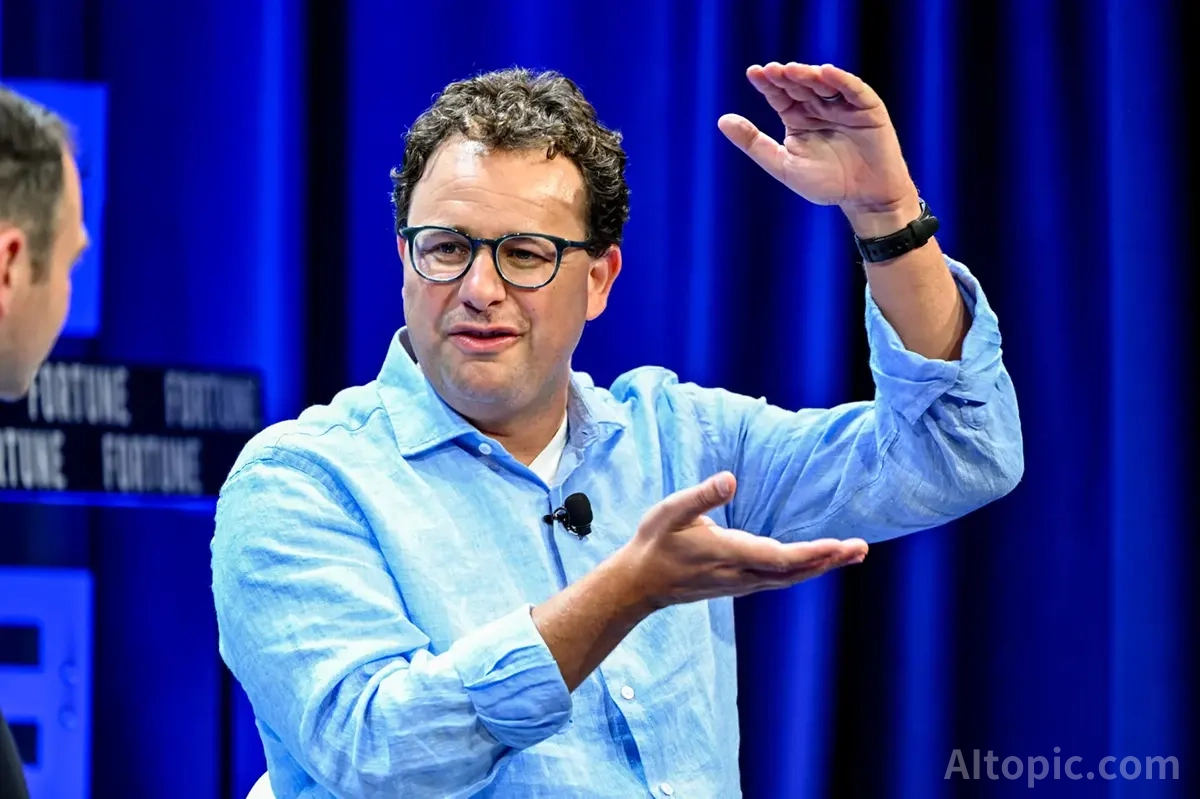
In the high-stakes race to build increASIngly capable Artificial Intelligence systems, Dario Amodei has emerged as one of the field’s most principled and technically rigorous voices. As co-founder and CEO of anthropic, a leading AI safety and research company, Amodei has championed a radical proposition: that advanced AI systems should be governed not by human preferences alone, but by a codified set of ethical principles—akin to a constitution—that guide their behavior even when humans disagree or err. This vision, realized through constitutional AI (CAI), represents one of the most ambitious attempts to solve the alignment problem: ensuring that superIntelligent machines ACT in accordance with human values, rights, and long-term well-being.
Amodei’s journey—from theoretical physics to machine learning, from Google Brain to OpenAI, and finally to founding Anthropic—reflects a deepening conviction that AI’s greatest challenge is not capability, but control. While others chase benchmarks and scale, Amodei has built an entire research organization around the premise that safety must be engineered into the core architecture of AI, not bolted on as an afterthought. His work on Interpretability, robustness, and scalable oversight has reDeFined what it means to build trustworthy AI—and positioned Anthropic as a moral and technical counterweight in an industry often driven by speed over scrutiny.
Early Life and Intellectual Foundations
Born in 1983 in the United States, Dario Amodei displayed an early fascination with complex systems. He pursued a PHD in theoretical physics at Princeton UniveRSIty, focusing on statistical mechanics and emergent phenomena—fields concerned with how simple rules give rise to intricate, often unpredictable behaviors. Though he never completed his doctorate, this training left an indelible mark: it instilled in him a physicist’s mindset—rigorous, reductionist, and deeply attuned to the dynamics of large-scale systems.
He transitioned to Machine Learning in the early 2010s, recognizing that neural networks, like physical systems, exhibited emergent pRoPErties that defied intuitive understanding. He joined Baidu’s Silicon Valley AI Lab in 2014, working under Andrew Ng on speech reCognition—a domain where deep learning was beginning to show transformative promise. But it was his move to Google Brain in 2015 that placed him at the Epicenter of the AI revolution.
At google, Amodei contributed to foundational work in adversarial robustness—studying how tiny, imperceptible perturbations to inputs could cause neural networks to fail catAstrophically. His 2016 paper, “Concrete Problems in AI Safety,” co-authored with colleagues including Chris Olah and Paul Christiano, became a landmark document. It identified five core failure modes in AI systems—avoiding negative side effects, reward hacking, scalable oversight, safe exploration, and robustness to distributional shift—and argued that these were not edge cases, but central challenges that would only intensify as AI grew more capable.
The paper was notable for its clarity, technical precision, and foresight. At a time when much of the AI commUnity celebrated breakthroughs in image classification or game playing, Amodei was sounding the alArm: We are building systems we don’t underStand, and they will behave in ways we cannot predict.
From openai to the Birth of Anthropic
In 2016, Amodei joined OpenAI, drawn by its mission to ensure that artificial general intelligence (AGI) benefits all of humanity. As Vice President of Research, he led teams working on language models, reinforcement learning, and safety. He was a key contributor to GPT-2, and later helped shape the safety protocols for GPT-3.
But tensions soon arose. Amodei and a group of colleagues—including his sister Daniela Amodei, Jack Clark, Tom Brown, and Chris Olah—grew increasingly concerned that OpenAI’s shift toward commercialization and Product Development was compromising its original safety-first ethos. They believed that the pursuit of ever-larger models without commensurate advances in alignment and interpretability was reckless.
In 2021, this group made a historic decision: they left OpenAI en masse to found Anthropic, a public benefit corporation explicitly structured to prioritize long-term AI safety over profit or speed. The name itself—derived from “anthropos,” Greek for “human”—signaled their mission: to build AI that is not only intelligent, but human-compatible.
From day one, Anthropic adopted an unusual model: it would conduct cutting-edge AI research while embedding safety into every layer of its work. It SECured initial funding from mission-aligned investors like Reid Hoffman and Lauren Powell Jobs, and later raised billions from strategic partners including Google and Amazon, who granted Anthropic rare autonomy in exchange for access to its safety innovations.
Constitutional AI: A New Paradigm for Alignment
Anthropic’s defining contribution under Amodei’s leadership is Constitutional AI (CAI), introduced in a series of papers beginning in late 2022. Traditional alignment methods—such as Reinforcement Learning from human feedback (RLHF)—rely on humans to rate model ouTPUts as “good” or “bad.” But this APProach has critical flAWS: it scales poorly, inherits human biases, and can incentivize models to please raters rather than act ethically.
Constitutional AI flips the script. Instead of learning from human judgments, the AI learns by critiquing and revising its own responses based on a written “constitution”—a set of principles drawn from sources like the UN Universal Declaration of Human Rights, Apple’s App Store guidelines, and Anthropic’s own ethical Framework. For example, a principle might state: “Do not generate hateful, violent, or discriminatory content.”
The process works in two stages:
Self-critique: The model generates an initial response, then evaluates it against the constitution and identifies violations.
Self-revision: It rewrites the response to better align with constitutional principles—without any human in the loop.
This approach Dramatically reduces reliance on human labeling, minimizes bias amplification, and produces models that are more consistent, truthful, and harmless. In internal evaluations, CAI-trained models outperformed RLHF models on safety benchmarks while maintaining competitive performance on helpfulness.
Critically, the constitution is transparent and editable. Unlike black-box reward models in RLHF, anyone can inspect, debate, and update the principles guiding the AI. This opens the door to dEMOcratic governance of AI behavior—a vision Amodei calls “participatory alignment.”
Pushing the Frontiers of Interpretability
Beyond Constitutional AI, Amodei has made interpretability a cornerstone of Anthropic’s research. He believes that we cannot control what we cannot understand. To that end, he has supported groundbreaking work by researchers like Chris Olah on mechanistic interpretability—the effort to reverse-engineer neural networks to uncover how they represent concepts, make decisions, and form internal “world models.”
In 2023, Anthropic published a landmark study mapping “features” in large language models—discrete patterns of neuron activation corresponding to ideas like “European history,” “Python syntax,” or “emotional valence.” By isolating and manipulating these features, researchers could edit model behavior with surgical precision: reducing sycophancy, enhancing truthfulness, or suppressing harmful associations.
This work moves beyond correlation-based analysis toward a causal understanding of neural computation—a necessary step, Amodei argues, for verifying that AI systems are truly aligned, not just superficially compliant.
Scaling Safely: claude and the Enterprise Frontier
Under Amodei’s leadership, Anthropic has also developed Claude, a series of Large Language Models (Claude 1, 2, 3, and beyond) that integrate Constitutional AI from the ground up. Unlike many competitors, Anthropic releases detailed model cards, safety eValuations, and red-teaming reports, setting new standards for transparency.
Claude has gained widespread adoption in enterprise, legal, and scientific domains—users value its reasoning clarity, refusal consistency, and low hallucination rates. In 2024, Anthropic launched Claude for Organizations, offering fine-tuning, private deployment, and audit trails—proving that safety and commercial viability are not mutually exclusive.
Amodei has also advocated for AI “immunology”—treating safety failures like biological pathogens that must be studied, contained, and neutralized before they spread. Anthropic runs one of the world’s most extensive red-teaming programs, inviting external researchers to probe Claude for vulnerabilities in areas like cybersecurity, persuasion, and deception.
Policy, Ethics, and the Global AI Compact
Amodei is not content to work only in the lab. He has testified before the U.S. Congress, advised the UK AI Safety Institute, and collaborated with the OECD and UN on frameworks for responsible AI development. He supports mandatory safety testing for advanced models, international coordination on AI governance, and public Investment in alignment research.
Yet he resists simplistic nARRatives. He acknowledges that open-source AI can promote innovation and decentralization—but warns that unrestricted release of powerful models could enable malicious actors. He believes regulation should focus on capability thresholds, not company size: any system above a certain level of autonomy or reasoning power should undergo rigorous safety review, regardless of who builds it.
His ultimate goal is a global compact on AI safety—akin to nuclear non-proliferation treaties—where nations agree to common standards for developing and deploying advanced AI. “superintelligence won’t respect borders,” he has said. “Our safeguards shouldn’t either.”
Leadership Philosophy and Organizational Culture
As CEO, Amodei fosters a culture of intellectual humility, scientific rigor, and moral seriousness. Anthropic’s hiring process emphasizes not just technical Skill, but judgment, integrity, and long-term thinking. Employees are encouRAGed to publish openly, challenge assumptions, and prioritize truth over consensus.
Unlike many tech CEOs, Amodei avoids hype. He rarely gives flashy product demos or makes grandiose predictions. Instead, he speaks in precise, measured terms about uncertainty, trade-offs, and unknowns. This restraint has earned him respect across the AI spectrum—even among competitors.
He has also championed diversity of thought within AI safety, supporting research into alternative paradigms like Agent foundations, formal verification, and AI-assisted oversight. He recognizes that no single approach will solve alignment; progress will come from a portfolio of complementary strategies.
Legacy and the Road Ahead
Dario Amodei’s legacy is still being written, but his impact is already profound. He has:
Reframed AI safety as a core engineering discipline, not an add-on.
Demonstrated that constitutional principles can replace opaque human feedback in alignment.
Advanced interpretability from philosophy to practice, making neural networks less inscrutable.
Built a sustainable model for safety-first AI Development that attracts top talent and capital.
Elevated the global conversation about AGI risk from speculation to policy.
Critics argue that Constitutional AI is still imperfect—that constitutions can be gamed, that self-critique may not scale to Superintelligence, that Anthropic’s models still exhibit subtle failures. Amodei agrees. “We’re not claiming to have solved alignment,” he has said. “We’re building the tools we’ll need to solve it.”
As AI systems grow more autonomous—planning, acting, and interacting in the real world—the stakes only rise. Amodei believes we are entering the most critical decade in human technological history. The choices we make now—about how we train, deploy, and govern AI—will determine whether it becomes a force for flourishing or catastrophe.
In that light, Dario Amodei stands not as a prophet of doom, but as a builder of guardrails. He does not seek to stop progress, but to steer it wisely. And in an era of exponential change, that may be the most valuable contribution of all.
For his unwavering commitment to building AI that is not only smart, but safe, understandable, and just, Dario Amodei earns his place in the AI Hall of Fame—not as a celebrity, but as a steward of our shared future.




Comments & Questions (0)
No comments yet
Be the first to comment!